Agencies
Escort profile page SEO: a standard every profile can meet
Profiles make up most of an agency site and cause most of its problems. What one good profile page contains, how to handle its photos, and the rule for when someone leaves.
By the CompanionRanker team · 5 minute read · Updated
What a profile page has to do
A profile has two jobs. It should rank when someone searches a companion's working name with your agency or city, and it should give a client enough to decide to get in touch. Most profiles manage neither, because they were put together in a few minutes on the day someone joined.
Profiles are also usually the largest group of pages on an agency site. When most of a site is thin, search engines can judge the whole domain more cautiously, including the city pages you care most about. That is why one short, realistic standard for every profile pays off across the site.
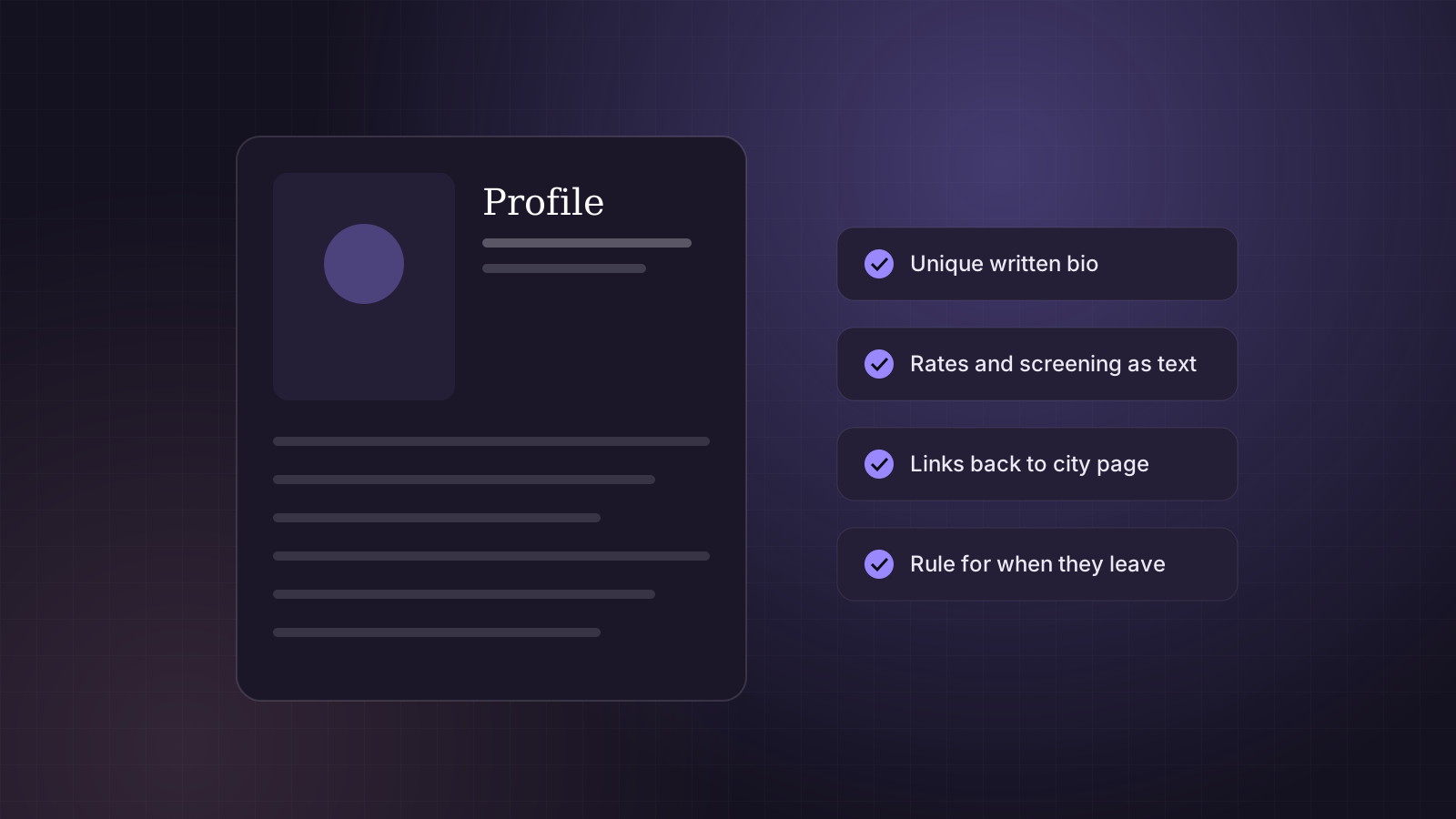
The anatomy of a good profile
Think of the page from top to bottom, the way a client reads it on a phone.
- Name and cities first. The working name as the main heading, and the cities covered right under it, as links to those city pages.
- A description only this person fits. Written from a short conversation with the companion about how they work. If it could be pasted onto another profile unnoticed, it is not done.
- Practical details as plain text. Availability, booking notice and rates if you publish them. Not inside images, and not in a table repeated word for word across every profile.
- Photos, handled as described below.
- A clear way to book, and links back to the city pages and to your booking or contact page.
Profiles that do not meet this yet can stay visible to visitors but should carry noindex until they do. We would rather see forty strong profiles in the index than two hundred weak ones.
Photos without the problems
Photos are the heaviest part of a profile, the part most often copied, and on an escort site the part most likely to trigger search filters.
Google's image guidance says alt text is the most useful attribute for understanding an image, while file names give only light clues. It also says Google combines alt text with computer vision and the page's content. In practice that means two things for escort sites. Alt text should be short and factual, such as the working name and the setting, with no keyword stuffing and nothing explicit. And alt text cannot hide what a photo shows: an explicit image is judged by what it contains, whatever the alt text says.
- Export photos at the size the page displays, in WebP, with width and height set so the page does not jump while loading.
- Remove location and device data before uploading.
- Use descriptive file names instead of camera defaults.
- Keep a record of where each photo is used. When photos turn up on other sites, it makes removal requests far quicker.
Your profile versus the directory copy
Most companions also appear on one or more directories. If a directory carries the same text as your profile, it usually wins the search, simply because it is the bigger site.
Keep the full, detailed version on your own site. Write a shorter, different version for directories, with a link back where the directory allows one. That gives search engines a clear reason to treat your page as the original, and it gives directory visitors a reason to click through.
When someone leaves
Start with what the companion wants. Some ask for their profile to come down the same day, and that request should always come before any SEO consideration. Remove the page and its photos promptly.
After that, do not leave an error behind. Redirect the old address with a permanent 301 to the city page it belonged to, so links pointing at it keep some value and visitors land somewhere useful. Update internal links the same day so the site does not link through redirects.
Avoid keeping "no longer with us" pages live for months. They keep someone's working name tied to your agency after they have moved on, and they add to the pile of pages with little reason to exist.
Where to start
Export every profile URL into a spreadsheet and mark each one: meets the standard, needs work, or should not be indexed yet. For most agencies, the first month goes on the middle group. The wider structure these profiles sit in is covered on our agency SEO page and in the agency versus independent guide. Directories applying the same idea to advertiser listings should read the directory architecture guide, and every package is on the pricing page.
Questions we are asked
How long should a profile description be?
There is no magic number. What matters is that the text could only describe this person. In practice that usually takes a few short paragraphs, and it rarely works in two lines.
Can the same profile text go on our site and on directories?
It can, but your site then competes with bigger sites carrying identical text, and it often loses. Keep the full version on your own site and a shorter, different one on directories.
Should profile pages use Person schema?
We do not add it. It puts more detail about a named individual into machine-readable form than most companions want, and it adds little for these pages. Breadcrumb markup is enough.